

| HOME | | | Overview | | | The Team | | | About | | | Newsletter | | | Contact | | | Links | | | Friends | | | The Novers | | | Benson Hydro | | |

|

|
The Novers Forest Garden Project | BAP Species:
Preliminary Report on Habitat
Potential For BAP species:
Biodiversity Action Plan (BAP) is an internationally recognized program addressing threatened species and habitats , which is designed to protect and restore biological systems. The original impetus for these plans derives from the 1992 Convention on Biological Diversity (CBD). As of 2006, 188 countries have ratified the CBD, but only a fraction of these have developed substantive BAP documents.
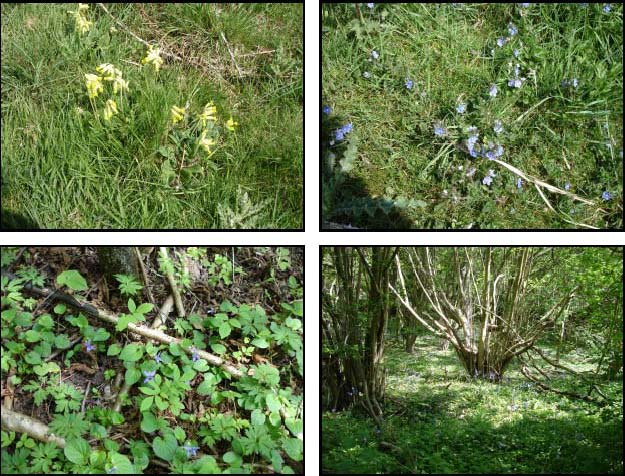
Plates 13-16
The principal elements of a BAP typically include :
- preparing inventories of biological information for selected species or habitats
- assessing the conservation status of species within specified ecosystems
- creation of targets for conservation and restoration
- establishing budgets, timelines and institutional partnerships for implementing the BAP.
Potential |
|
BAP |
Protected |
|
|
Associated quarrying structures are likely to be of significant importance for roosting and hibernating bats. There are a number of active badger sets scattered throughout the woodland |
|
BAP species known to be present on the Novers site are,
|